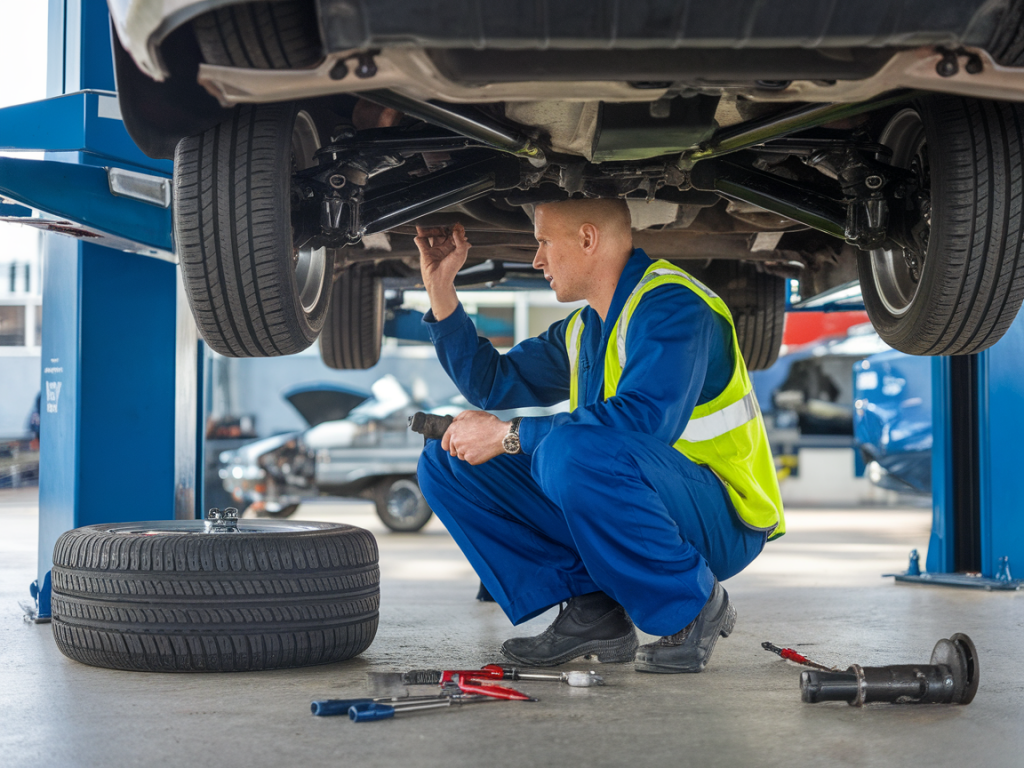
I’ve spent enough afternoons wrestling with FWD hatchbacks to know one thing: torque steer is more than an annoyance — it’s a confidence killer. Whether you’re launching from a light in a hot-hatch or accelerating out of a corner in a daily driver, that sudden tug at the wheel can be unnerving. Over the years I’ve fixed, mitigated, and debugged torque steer on everything from a Civic Si to a Euro hatch with a turbo-and-bigger-tyre setup. Here’s a practical, hands-on guide to diagnosing and reducing persistent torque steer using alignment, bushing, and tire tweaks.
What I mean by torque steer — and what causes it
Torque steer is the tendency of a front-wheel-drive car to pull left or right under heavy acceleration. Common causes I see:
Unequal driveshaft length or stiffness — many FWD cars have one shorter inboard shaft, and differences in torque reaction create a net twisting force.Asymmetric grip at the front wheels — due to alignment, corner weight, or tire differences.Worn or soft engine/transmission mounts and front suspension bushings — allow driveline movement that translates to steering input.Toe, caster, and camber being outside spec — even small deviations matter under load.Uneven tire pressure, wear, or different tire compounds on each side — grip mismatch is immediate cause often overlooked.Before spending on parts, start with a methodical approach: measure, correct, then test. Fixing torque steer is usually a combination of alignment corrections, stiffer bushings/mounts where needed, and sorting tires.
Step 1 — Baseline checks I always run first
Don’t jump to parts. I follow this checklist:
Inspect tires for unequal wear, sidewall damage, or mismatched brands/models.Check and equalize tire pressures cold to manufacturer spec (use a quality gauge).Visually inspect CV boots, driveshafts, and wheel bearings for play.Check engine and transmission mount condition for cracks, oil saturation, or excessive movement.Verify steering rack and tie rod ends for play.If anything fails inspection, fix it. A torn inner CV boot or a soaked engine mount will sabotage alignment and handling fixes.
Alignment settings that actually reduce torque steer
Alignment is the single most cost-effective step. When I take a car in for alignment to attack torque steer, I request the following mindset from the technician: hold steering wheel centered, set toe and caster to manufacturer spec first, and then adjust toe to reduce pull under load.
Toe — Toe is the primary tuning lever. Excessive toe-in or toe-out causes unequal slip angles under drive. For many FWD hatchbacks I aim for slightly toe-in on both front wheels within the factory range to increase straight-line stability. If one side has been wearing faster, biasing the toe slightly towards the pulling side can help counteract the pull (small adjustments — think 0.02°–0.05°).Caster — More caster increases straight-line stability and steering feel. If caster is asymmetric between sides, the car will pull. Adjust caster to match left and right within spec; when in doubt, add a touch of positive caster if the car allows it (some aftermarket adjustable control arms help here).Camber — Camber is less directly connected to torque steer, but excessive negative or positive camber that differs side-to-side changes contact patch and can aggravate pull.Thrust angle — Ensure the rear axle and steering rack are aligned so the thrust angle is zero; otherwise the car will try to track sideways and magnify torque steer symptoms.Tell the shop you want them to center the steering wheel and use steering wheel centring tools or a temporary steering stop. Small toe adjustments made with the wheel centered are what matter when the car is under drive torque.
Bushings and mounts: where stiffness helps (and where it can hurt)
Replacing bushings and mounts should be targeted, not blind. I’ve learned the hard way that stiffer isn’t always better — too-rigid mounts can transmit more vibration and make low-speed torque steer feel worse. Here’s how I approach it:
Engine and transmission mounts — If mounts are visibly degraded, replace with quality OEM or semi-solid aftermarket mounts. I prefer polyurethane mounts from trusted brands like Energy Suspension for daily-driven cars when mounts are very soft, but I avoid rock-hard motorsport mounts as they create NVH and can make steering twitchy.Front control arm and subframe bushings — Replace torn or collapsed rubber bushings. Lightweight polyurethane helps control movement and can reduce torque steer by keeping suspension geometry stable under load. I often use OEM for longevity unless the car is performance oriented.Steering rack and tie rod end bushes — Ensure no play. Replace worn tie rods first; worn outer tie rods create wandering that’s amplified under torque.When fitting firmer bushings, I do it in stages: replace worn parts with OEM spec first, test, then move to polyurethane if needed. Track behavior and comfort carefully after each change.
Tire choices, pressures and rotation patterns that matter
Tires are where a lot of torque steer lives. Different compounds, wear rates and pressures change lateral grip and slip angle drastically.
Match tires left-to-right — Same brand, model, size, and similar tread depth. If you’ve got a newer tire on one side and a worn one on the other, the newer tire will grip more and pull the car.Pressure tuning — Lower pressure increases footprint and grip; higher pressure reduces it. I equalize cold pressures to spec, then do small (2–3 psi) differential adjustments during testing: sometimes reducing pressure on the pulling side by 2 psi reduces the pull because it increases that side’s grip. Don’t go outside manufacturer-recommended extremes.Compound and construction — If you’ve fitted stickier tires on one side (e.g., fitment/clearance issues), the car will pull towards the grippier side. For consistent behavior, use identical tires on the driven axle.Staggered widths — Avoid mixing widths fore/aft or side-to-side on FWD cars; it complicates slip angle behavior and can increase torque steer.After any tire change, drive and reassess in a safe environment. Track miles or spirited roads will reveal remaining issues quicker than low-speed city driving.
Testing method I use after each change
Method works because it isolates variables. After each repair or adjustment, I repeat this:
Reset cold tire pressures to my test baseline.Center the steering wheel and note if it’s straight while rolling slowly.On an empty, safe road, perform a few moderate, steady throttle accelerations from 20–40 mph and note pull direction/magnitude.Try low-speed hard acceleration from a stop (in a controlled area) to check for initial tug.Document results. If improvement occurred, stop and live with it for a week — some changes need miles to bed in.When to consider driveshaft or suspension geometry upgrades
If alignment, bushings, and tires haven’t fixed it, consider:
Equal-length half-shaft conversion — On some cars (older Fords, for example) aftermarket equal-length shafts reduce torque steer dramatically. This is relatively expensive and more common on performance builds.Adjustable control arms or strut top mounts — Allow precise caster/camber adjustments to match sides.Subframe reinforcement — If chassis flex is present, stiffening the subframe can stabilize geometry under drive torque.These are higher-cost and more involved; only pursue if the basic fixes don’t reach your goals.
| Problem | Quick fix | If unresolved |
|---|
| Pulls under acceleration | Check/adjust toe and pressures; match tires | Check mounts, replace bushings, consider equal-length shafts |
| Steering feels loose | Replace worn tie rods/rack mounts | Inspect subframe, steering rack; tighten bushings |
| Pull only from stop | Replace engine/trans mounts | Consider stiffer precision mounts |
Fixing torque steer is rarely a single miracle part. It’s a process of elimination: correct geometry, remove unwanted movement with healthy bushings/mounts, and eliminate grip asymmetry at the tires. Do the cheap, reversible things first — alignment and tires — then move on to bushings and driveline upgrades. With patient, measured steps you’ll restore confidence to your FWD hatchback and enjoy smoother, safer acceleration.