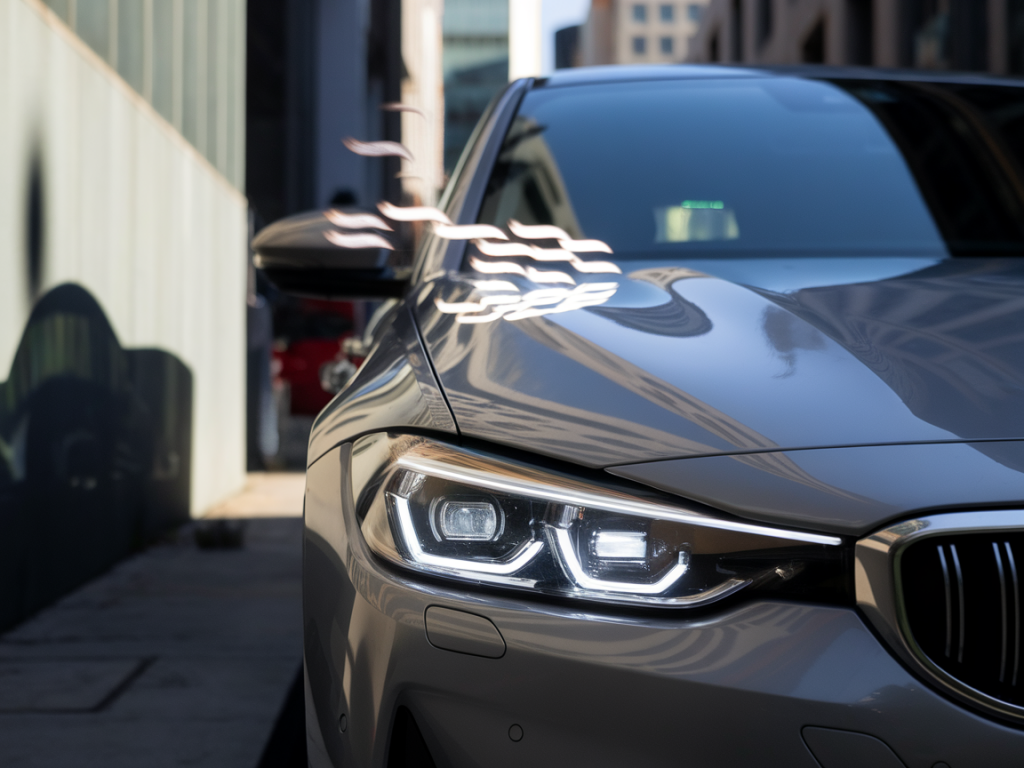
When I first swapped the halogens in my daily driver for a pair of bright aftermarket LED bulbs, I expected crisper light and better visibility. What I didn't expect was a strobe-like flicker every time I slowed down at city lights or idled at a roundabout. If you've seen that same nervous pulsing from your new LEDs, you're not alone — and it's usually fixable without replacing the whole lighting system.
Below I’ll walk you through why LED headlights flicker in city driving, how to diagnose the root cause, and the simplest electrical fixes I’ve used on my own cars and recommended to readers. I’ll keep things practical: the kind of steps you can do in your garage or ask a shop to handle without getting ripped off.
Why LED headlights can flicker in city driving
LED bulbs behave very differently from incandescent or halogen lights. They need a stable DC voltage and a consistent current to run smoothly. Here are the common reasons that stability breaks down in urban driving conditions:
Quick checks to run before you buy parts
Before you reach for resistors or decoders, do a few quick tests. These have saved me time and money more than once:
Simple fixes that usually stop flicker
Here are fixes I’ve applied — starting from easiest/cheapest to more involved. I include approximate cost and difficulty so you can plan.
Corrosion or loose grounds are a surprisingly common cause. Remove the headlight assembly or access panel and clean the ground strap and connector pins with contact cleaner and a wire brush. Re-tighten the ground bolt with a torque wrench to factory spec if available.
A relay harness supplies power to the LEDs directly from the battery through a relay, while using the original headlight wiring only as a trigger. That eliminates voltage drop through old wiring and keeps the factory circuit from being subjected to the LED’s lower load. Brands like Morimoto, Hella, or universal “H4 relay harness” kits are good options.
These adaptors mimic the resistance/load of a halogen bulb so the car’s computer stops pulsing or throwing errors. They also include filtering electronics to smooth PWM signals. I’ve had good results with DEPO and Philips CANbus adapters on several European and Asian cars.
Anti-flicker caps (sometimes called anti-flicker modules) smooth short dips in voltage and handle PWM-related flicker. Install them between the bulb connector and the car wiring. They’re compact and reversible — a great first parts try.
Aftermarket LEDs with high-quality drivers (better filtering, wide input voltage range) behave much better. If you’re swapping older cheap LEDs, upgrading to a trusted brand like Philips X-tremeUltinon, Osram Night Breaker LED kits, or a vehicle-specific retrofit kit from Morimoto can eliminate flicker because they’re designed to work with automotive electrical systems.
If voltage is unstable because of a weak battery or failing alternator, lights can flicker under low-speed load. Get a battery and charging system test at a parts store or garage. A new battery or alternator fixes this permanently in those cases.
How I choose the right fix for a given car
In my experience, the right approach comes down to three questions: Does the flicker change with RPM? Do stock bulbs behave the same? Does the car throw a bulb-out or CANbus error?
Practical wiring tips and safety notes
When working on lighting wiring be careful: use fuse-protected relay harnesses, avoid running power wires near moving parts, and make sure any added resistors or modules are mounted away from plastic and heat sources. If you add resistors to simulate halogen load, remember they get hot and need metal mounting points and proper insulation. Always disconnect the battery when doing major wiring changes.
| Fix | Primary cause addressed | Estimated cost | Ease |
|---|---|---|---|
| Clean grounds | Poor connection | $0–$10 | Easy |
| Relay harness | Voltage drop | $15–$40 | Moderate |
| CANbus decoder | ECU load detection/PWM | $20–$60 | Easy |
| Anti-flicker capacitor | PWM/noise stabilization | $15–$50 | Easy |
| Upgrade bulbs | Poor internal drivers | $100–$600 | Moderate |
| Battery/alternator service | Voltage instability | $0–$150+ | Easy–Pro |
If you want, tell me your car make, model and what bulb type you installed (H4, H7, H11, 9006, etc.) and I’ll suggest the most likely fix and specific parts or kits that fit. I’ve handled this on everything from older Hondas and Toyotas to modern BMWs and Volkswagens — the solutions are surprisingly consistent once you know where to look.