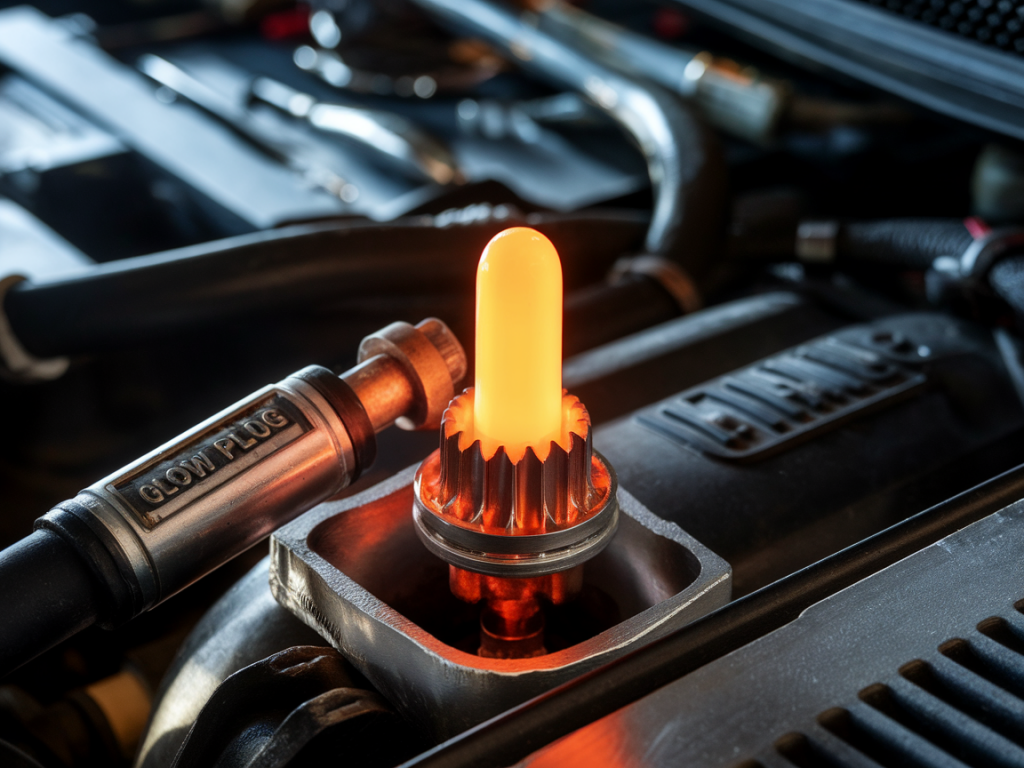
I’ve lost count of how many times a diesel glow plug light flashing on startup sent a driver straight to the shop convinced they needed new injectors. I’m Camille Moreau from Adumekaniks, and after years of troubleshooting diesel systems in my own garage and working with techs, I’ve learned that a blinking glow plug light rarely means the injectors are the problem. In this article I’ll walk you through pragmatic checks and fixes that stop that annoying flash, save you money, and help you avoid replacing perfectly good injectors.
What the flashing glow plug light usually means
On most modern diesel cars and light trucks the glow plug warning (often a spiral or coil icon) flashes to indicate a pre-heating or post-diagnostics issue. Common causes include:
Faulty glow plugs or their wiringLoose or corroded battery connectionsBad glow plug relay or control moduleHigh resistance in the glow plug circuit (connector corrosion, broken earths)Fault codes triggered by related systems (EGR, MAF, DPF) that affect engine managementInjectors are complex and visible, so they’re an easy scapegoat. But injectors rarely cause the glow plug indicator to blink unless there’s an accompanying engine misfire or code specifically pointing to injector circuit faults.
First checks I always do — quick and cheap
Before spending money on parts or diagnostics, do these fast checks. You can often complete them with a basic tool kit and a multimeter.
Battery health and terminals: A weak battery or corroded terminals will affect the glow system. I clean terminals, tighten clamps, and check voltage. At rest I'd like to see 12.6V or higher. Cranking below 11.5V can trigger strange glow plug behavior.Fuses and relays: Check the glow plug fuse(s) and relay. Swap relays with a similar one in the fuse box if unsure.Visual inspection: Look for damaged wiring, oil-soaked connectors, or loose earth straps on the engine block. Glow plug wiring is often routed near the valve cover and can suffer from heat and oil leaks.Glow plug operation: With the key on but engine off, you can check if glow plugs are getting power. Use a multimeter or test light on the glow plug connector (consult the service manual for safe procedure).Testing glow plugs and related circuits
I prefer a systematic approach: measure, compare, then replace only if necessary.
Resistance test: Remove each glow plug and measure resistance with a multimeter. Typical values vary by model (check your manual), but most diesel glow plugs measure between 0.5 and 2.0 ohms. A single open or very high resistance plug can cause the ECU to flash the light.Current draw test: A clamp meter on the supply lead while cranking shows how much current the glow system draws. A significantly lower or unbalanced draw points to a failed glow plug or wiring issue.Connector and harness continuity: Wiggle the harness while watching readings. Intermittent faults are common and can mimic injector problems.Common pitfalls that lead to unnecessary injector replacements
Here are mistakes I see often — and why they lead to wrong diagnoses:
Relying on one scan tool code: Generic OBD-II codes like P06xx or P020x can be misinterpreted. Some shops jump to injectors because of misfires logged, but the root cause might be weak glow during startup causing initial misfires and logged codes.Replacing parts instead of fixing wiring: Replacing an injector when the connector or ground is bad won’t help. Wiring gremlins are cheap to repair and often ignored.Skipping basic electrical tests: Injectors and glow plugs are both electrical components — measure voltage, resistance, and current before buying parts.How I fix a flashing glow plug light — step-by-step
This is the routine I follow. It’s what I’ll try in my garage before ordering injectors or booking expensive diagnostics.
Step 1 — Clear codes and reproduce: Read and save fault codes (I use an OBD-II scanner like an Autel or a cheap Bluetooth adapter). Clear them, then cycle ignition to reproduce. Note whether the light flashes immediately or only after cranking.Step 2 — Battery and charging system: Confirm resting voltage and alternator output. I prefer to resolve any battery issues first.Step 3 — Inspect connectors and earths: Clean and secure glow plug connectors and engine ground straps with a wire brush and dielectric grease. Corroded earths are a silent killer.Step 4 — Measure glow plug resistance: Pull each glow plug and test. Replace only the faulty ones; replacing all is sometimes sensible if multiple have drifted from spec and you're near the end of life.Step 5 — Check relay and control module: Swap or bench-test the relay. If the vehicle has a dedicated glow control module, check supply and signal voltages. Modules fail, especially on older vehicles.Step 6 — Re-scan and monitor live data: After repairs, monitor glow plug circuit current and ECU preheat commands. Confirm normal operation for warm and cold starts.When injectors are actually the culprit
Injectors are expensive. I only consider them when the following are true:
Fault codes point explicitly to injector circuits (for example, P02xx codes tied to specific cylinders) and live data shows no pulse or abnormal injection parameters.There are persistent misfires after glow system and wiring faults were resolved.Mechanical tests (compression, leak-down) rule out cylinder mechanical problems.Tools and parts I recommend
Keeping a small kit in my garage prevents needless trips to the shop:
Multimeter (fluke-style recommended)Clamp meter for current drawOBD-II scanner (Autel, Launch, or a reliable Bluetooth adapter with Diesel-capable software)Contact cleaner, dielectric grease, wire brushReplacement glow plugs from trustworthy brands (Bosch, NGK) — buy OEM spec itemsSpare relay and good quality connectorsQuick reference table — typical tests and pass/fail cues
| Test | Good result | Bad result / action |
| Battery resting voltage | >12.4 V | <12.0 V — charge/replace battery |
| Glow plug resistance (each) | 0.5–2.0 Ω (model dependent) | Open or >5 Ω — replace plug |
| Glow current draw | Stable, similar per cylinder | Low or unbalanced — inspect wiring/connector |
| Grounds and connectors | Clean, tight, corrosion-free | Corrosion/oil — clean and secure |
Tips to avoid future problems
From my experience, simple maintenance prevents most glow plug headaches:
Keep engine oil changes on schedule — oil leaks and grime kill connectors.Corrosion-proof grounds and battery terminals with dielectric grease.Run a full diagnostic if multiple random codes appear; an intermittent sensor (EGR, MAF) can cascade into glow-related symptoms.Document any changes and test results — it’s easy to lose track when you replace parts one-by-one.If you’re unsure at any point, a diesel specialist with a waveform scope and injector test bench can do definitive testing — but start with the basics I’ve outlined. You’ll often find the solution in minutes, not hundreds of euros on injectors. If you want, tell me the make, model, year of your vehicle and the exact behavior; I can suggest model-specific checks or common weak points I’ve seen for that platform.