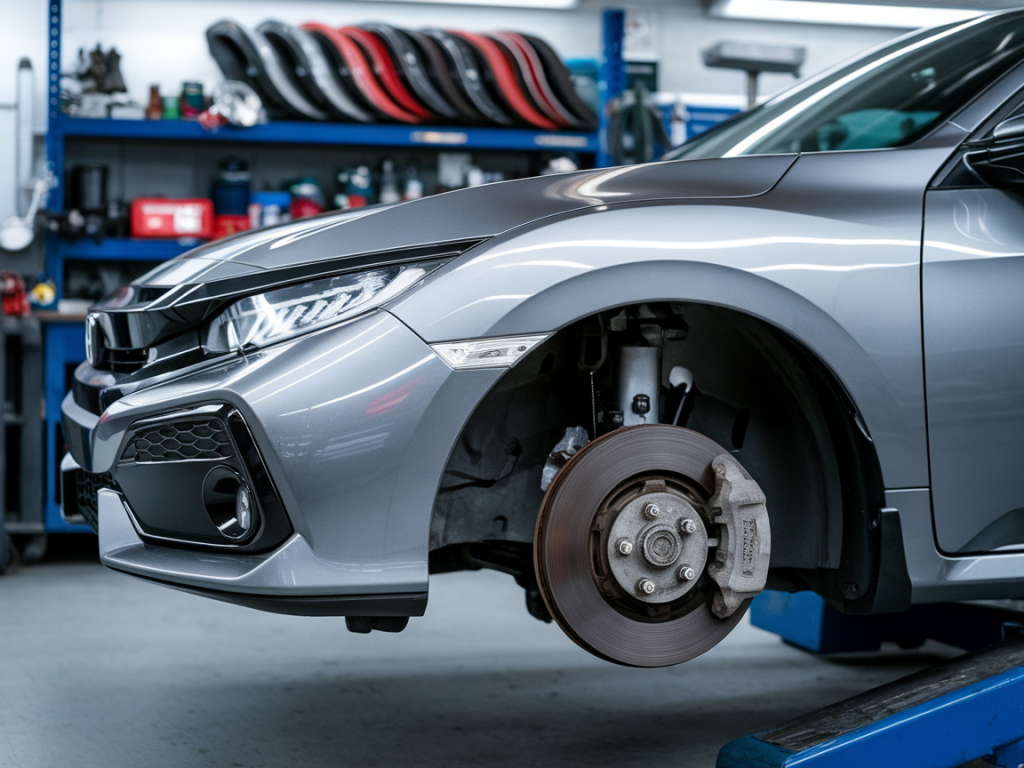
I change brake pads more often than many drivers change their oil — partly because I love working on cars, and partly because a Honda Civic is a great platform to test different pads and learn what fits different driving habits and budgets. Over the years I’ve swapped ceramic, semi-metallic, and organic pads on Civics used for commuting, spirited canyon runs, and occasional track days. If you’re trying to choose the right brake pads for your Honda Civic, I’ll walk you through what matters, what to expect, and how to balance cost, performance, and longevity.
Why your driving habits matter
Brakes aren’t one-size-fits-all. The type of driving you do is the single biggest factor in choosing pads.
If you’re a city commuter: lots of stop-and-go, low speeds, and short trips mean pads that resist noise and dust and work well when cold are useful.If you do highway miles: pads that offer long life and low wear tend to be more important than ultimate bite.If you enjoy spirited driving or occasional track use: you need pads that resist fade under heat and offer stronger initial bite and modulation.If you tow or carry heavy loads: look for pads with higher thermal capacity and stronger friction coefficients.On a Civic, these differences are amplified because the cars are light, brakes are relatively small, and owners expect predictable behavior. My daily-driven Civic favored low-noise ceramic pads, while my weekend car that saw a few track sessions used performance semi-metallic pads for heat tolerance and stopping power.
Types of brake pads: what they feel like on a Civic
There are three common pad materials you'll see on the market: organic (NAO), ceramic, and semi-metallic. Each has trade-offs.
Organic (NAO) — softer, quieter, and often cheaper. They’re gentle on rotors and work well for casual driving. Downsides: higher wear rate and poor high-temperature performance. I rarely recommend these for drivers who do highway pulls or spirited driving.Ceramic — quiet, clean (low dust), and stable across a wide temperature range. They offer good modulation and are comfortable for daily commuting. On my Civic, ceramic pads gave confident, linear braking without the loudness or dust associated with some performance pads. They cost more than organic pads but typically outlast them.Semi-metallic — higher friction, better heat dissipation, and strong initial bite. They’re popular for performance driving and towing. The trade-offs are more dust and occasional noise. For a Civic used in spirited driving or light track work, semi-metallic pads (brands like Hawk Performance or EBC Green/Redstuff lines) provided the consistent bite and fade resistance I needed.Match pad compound to your budget
Budget matters. Here’s how I typically advise readers based on price tiers:
Low budget — generic or economy organic pads. They’re inexpensive and OK for light urban driving, but expect shorter life and more frequent changes.Mid-range — ceramic pads from reputable brands (e.g., Akebono, Bosch, Wagner). They balance comfort, longevity, and acceptable performance for most Civic owners.Premium/performance — semi-metallic or carbon-ceramic blends from performance brands (e.g., EBC, Hawk, Brembo). Best for spirited drivers and track use. Expect more dust but excellent heat handling.How to read pad specifications
Manufacturers list a few key numbers and compatibilities — don’t ignore them.
Friction coefficient — higher numbers mean more stopping force. For street use in a Civic, a coefficient between 0.35 and 0.45 is typical. Performance pads can be higher but may increase rotor wear.Temperature range — tells you where the pad performs best. Street pads work well from cold up to moderate temperatures; track pads list much higher ranges.Wear characteristics — look for expected pad life or mileage estimates. Ceramic pads often list higher expected mileage than organic or high-metallic compounds.Compatibility with rotors and calipers
Not all pads pair equally with every rotor. If you have factory rotors on your Civic, most ceramic and OEM-style semi-metallic pads will mate well. If you upgraded to slotted or drilled rotors, choose pads designed for higher heat and potential increased wear.
Also consider whether your Civic has stock calipers or upgraded units. High-performance calipers can clamp harder and produce more heat — match them with pads rated for higher temperatures. When I fitted aftermarket calipers on a Civic Si project, switching to a higher-temp semi-metallic pad reduced fade during canyon runs.
Noise and dust: the real annoyances
Many drivers ask only about stopping power, but noise and dust are the parts you’ll notice every day. Ceramic pads are the quietest and produce the least brake dust. Semi-metallic pads offer superior performance but create more dust and sometimes an audible metallic squeal when cold.
If curb appeal and wheel cleanliness matter — especially on alloy wheels — ceramic pads are worth the extra cost. If you park in a garage and want predictable, silent stops for daily errands, ceramic pads or high-quality organic compounds are the best fit.
Brands and specific recommendations for Honda Civic
Here are a few pads I’ve used and liked on various Civic models:
Akebono ProACT — ceramic, OEM-level fit, quiet, long-lasting. Great for commuters and highway drivers.Bosch QuietCast — value ceramic option, good balance of price and performance.Wagner ThermoQuiet — ceramic with good heat management; affordable and quiet.EBC Yellowstuff / Redstuff — performance-oriented; Yellowstuff is for track/spirited use, Redstuff is for street performance with less dust. Works well on Si models and modified Civics.Hawk HPS — strong initial bite and great modulation; popular among enthusiasts for street performance.Installation, bedding, and maintenance tips
Buying the right pads is only half the job — proper installation and bedding influence performance and longevity.
Always replace pads in axle pairs (both front or both rear) to keep braking balanced.Inspect rotors. If they’re deeply scored or warped, either resurface or replace them. Thin rotors can contribute to increased heat and poor braking.Use the correct pad shims and anti-rattle clips—many kits include these, but OEM-quality hardware is worth installing.Bedding procedure: perform a series of controlled stops from moderate speed to transfer a thin layer of pad material to the rotor. Follow the manufacturer’s bedding instructions; proper bedding improves bite and reduces noise.After installation, avoid hard braking for the first 100 miles to allow compounds to settle in.Quick comparison table
| Pad Type | Best For | Pros | Cons |
| Organic (NAO) | Low-cost city driving | Quiet, cheap, gentle on rotors | Shorter life, poor high-temp performance |
| Ceramic | Daily driver, highway | Quiet, low dust, long life | Higher cost, slightly less initial bite than some semi-metallics |
| Semi-metallic | Spirited driving, light track use | High bite, good heat resistance | More dust, possible noise, higher rotor wear |
If you tell me how you use your Civic — city commuter, highway cruiser, weekend canyon carver, or occasional track day — I can suggest an exact pad model and bedding routine for your specific model year and trim. I’ve swapped dozens of pads on Civics and can help you find the sweet spot between cost, comfort, and stopping power.