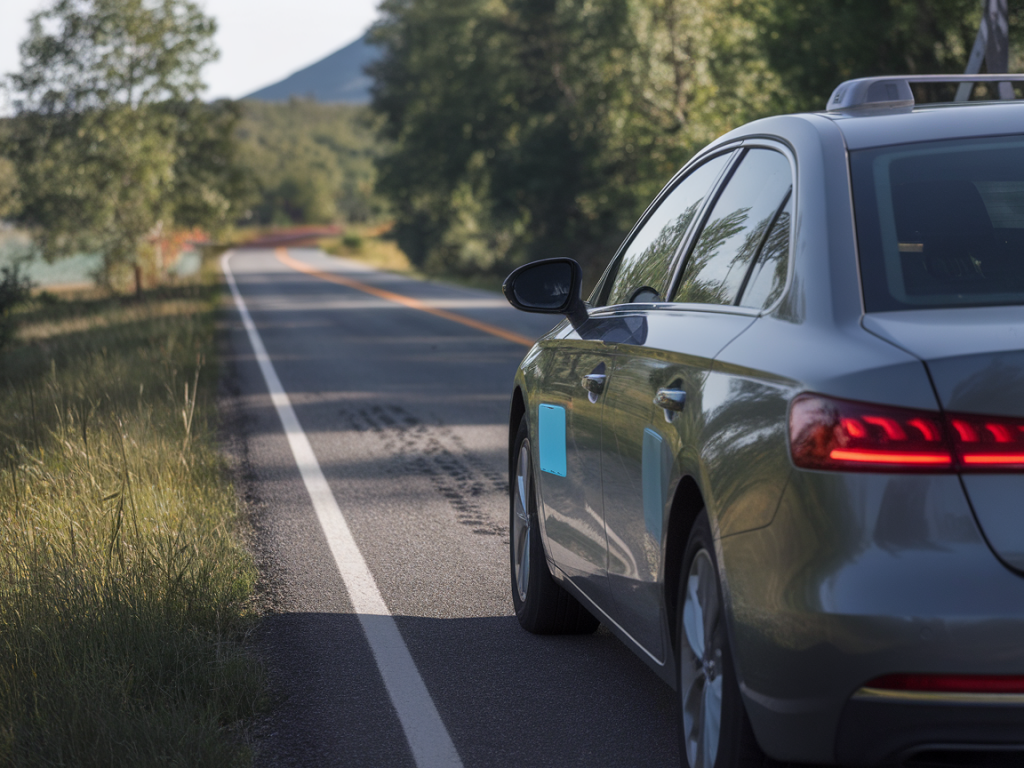
I’m often asked why adaptive cruise control (ACC) seems perfectly fine on the motorway but suddenly brakes late — or not at all — when I’m out on a rural lane. It’s frustrating and, frankly, a little scary. I’ve spent years working with cars, testing driver aids and troubleshooting real-world faults, so I want to walk you through what’s happening, why ACC behaves differently on rural roads, and the practical steps you can take to improve or fix it.
Why ACC brakes late on rural roads
Adaptive cruise systems rely on a combination of radar, camera, ultrasonic sensors and software to judge the speed and distance of the vehicle ahead. On rural roads, several factors conspire to make that job harder:
Poor or inconsistent lane markings: Many ACC systems use camera data to supplement radar — identifying lane edges and vehicle shapes. Faded or missing markings on country lanes reduce the camera’s ability to track the road geometry and other vehicles.Slower or non-standard targets: Farm vehicles, cyclists, horses or parked cars aren’t always detected the same way as a regular car. Radar profiles and algorithm thresholds are tuned for typical passenger cars; unusual targets can be misclassified or detected late.Curves, hills and blind crests: Rural roads have more vertical and horizontal curvature. A car emerging over a blind crest or around a sharp bend may only be detected at close range, leaving the system less time to react.Environmental factors: Dirt, rain, fog, glare from sun at low angles, or splash from mud can temporarily block or confuse optical and radar sensors.System settings and speed limits: Some ACC modes are optimized for highway driving and intentionally use more conservative braking (or delayed braking) at low speeds to avoid frequent, jerky interventions — especially in stop-and-go scenarios.Calibration and hardware issues: Misaligned radar, dirty cameras, or an out-of-calibration windshield-mounted sensor can reduce detection range and accuracy.How the system decides when to brake
Understanding the logic helps. Most systems calculate a safe following distance (often a time gap like 1.5–2.5 seconds) and use the radar/camera fusion to estimate closing rate. If the system determines the following distance will be breached it will instruct the brakes to slow down. On rural roads the inputs are less reliable, so the system may wait for higher confidence before applying brakes — which looks like “late braking” from the driver’s perspective.
Practical checks and fixes you can do yourself
Before booking a dealer, try these steps. I do them on test vehicles and when helping friends — they often resolve the issue.
Clean sensors and cameras: Gently clean radar housings (usually behind the grille or lower bumper) and the windshield area around the forward camera. Use a soft cloth and manufacturer-recommended cleaner; avoid harsh chemicals. Dirt, bug splatter and small stones can significantly reduce detection range.Inspect for damage or knocks: Look for dents, cracked housings or misaligned bumper panels that could hide or tilt a radar unit. Even small impacts can shift the sensor's aim.Check tyre pressure and condition: Uneven tyre pressure affects ride height and sensor angles for some systems. Make sure tyres match manufacturer specs and are evenly worn.Confirm wheel alignment: If the car steers or tracks unevenly, it could affect camera lane detection. A proper alignment helps the car sit straight in the lane and improves sensor performance.Review ACC settings: Many cars let you select follow gap and sensitivity. Use a longer following gap on rural roads. Some systems also have “low-speed” or “rural” modes — check your owner’s manual.Try different ACC modes: If your vehicle has a “comfort” vs “sport” mode, test both. Sport settings might be more assertive with braking; comfort settings can be more relaxed.When to update software or recalibrate
Modern driver assistance is as much software as hardware. Manufacturers release firmware updates that improve detection algorithms or fix known bugs. Here’s what to do:
Check for software updates: Some brands (Tesla, Volvo, BMW, Mercedes) push updates over the air; others require a dealer visit. If you suspect late braking is caused by poor detection, ask your dealer whether there’s a recent ADAS update.Windshield or camera recalibration: If the windshield has been replaced, or the camera/radar unit has been disturbed, you’ll often need a recalibration. This isn’t always optional — some systems will limit ACC functionality until recalibrated. Recalibration can be static (in the workshop) or dynamic (driving on a road with calibrated markers).Dealer diagnostics for radar alignment: Radar units can be physically misaligned after collisions or rough impacts. A dealer or qualified ADAS specialist can measure and adjust radar aim. This usually requires scan tools and sometimes calibration targets.What repairs or professional services may be necessary
When DIY steps don’t fix it, you’ll likely be looking at professional services. I list the common ones I’ve encountered:
ADAS recalibration: Cost varies by brand and whether static or dynamic recalibration is needed. Expect a range from modest to several hundred euros/dollars depending on equipment.Sensor replacement: A cracked radar housing or damaged camera often requires replacement. Use OEM parts if possible — aftermarket sensors aren’t always compatible with your car’s software.Software flash/update: If the vehicle’s control modules need a firmware update, a dealer or authorized workshop will perform it. Some independent shops have OEM-level scan tools that can apply updates.Wheel alignment and suspension repairs: If ride height or suspension damage is affecting sensor aim, addresses those first before recalibrating.How to test improvements safely
After you clean or recalibrate, test the system in controlled conditions:
Pick a quiet rural road with good sight lines.Set ACC to a moderate speed and longer following gap.Have a second person drive a lead car that you know is a standard passenger vehicle.Observe how early the ACC detects the lead car and how smoothly it brakes — avoid complex scenarios like cyclists or farm machinery during tests.If you still see delayed braking even after calibration and updates, document the conditions (weather, road type, vehicle ahead) and raise the issue with the dealer. Persistent problems sometimes point to limitations of the system rather than a fault — manufacturers tune conservatively to avoid false positives and abrupt braking.
Table — Common causes and quick fixes
| Symptom | Likely cause | Quick fix |
| Late braking on curves | Camera loses lane info; radar sees targets late | Use longer following gap; avoid relying on ACC in tight curves |
| Random late braking in mud or rain | Obstructed sensors | Clean sensors, camera and windshield; dry area if possible |
| System degraded after windshield replacement | Camera/radar misaligned | Book ADAS recalibration with dealer or specialist |
| Consistent late braking vs farm vehicles | Object classification limits | Manual braking; avoid using ACC around slow/non-standard targets |
Finally, remember that ACC is an aid, not a replacement for attention. On many rural roads I prefer to keep full control — using ACC only where the road geometry, visibility and traffic behavior match what the system was designed for. When you combine smart use with regular maintenance (cleaning sensors, updating software, checking alignment), ACC is a great tool. But if your system consistently underperforms, document the behavior and get professional help — safety is the priority.