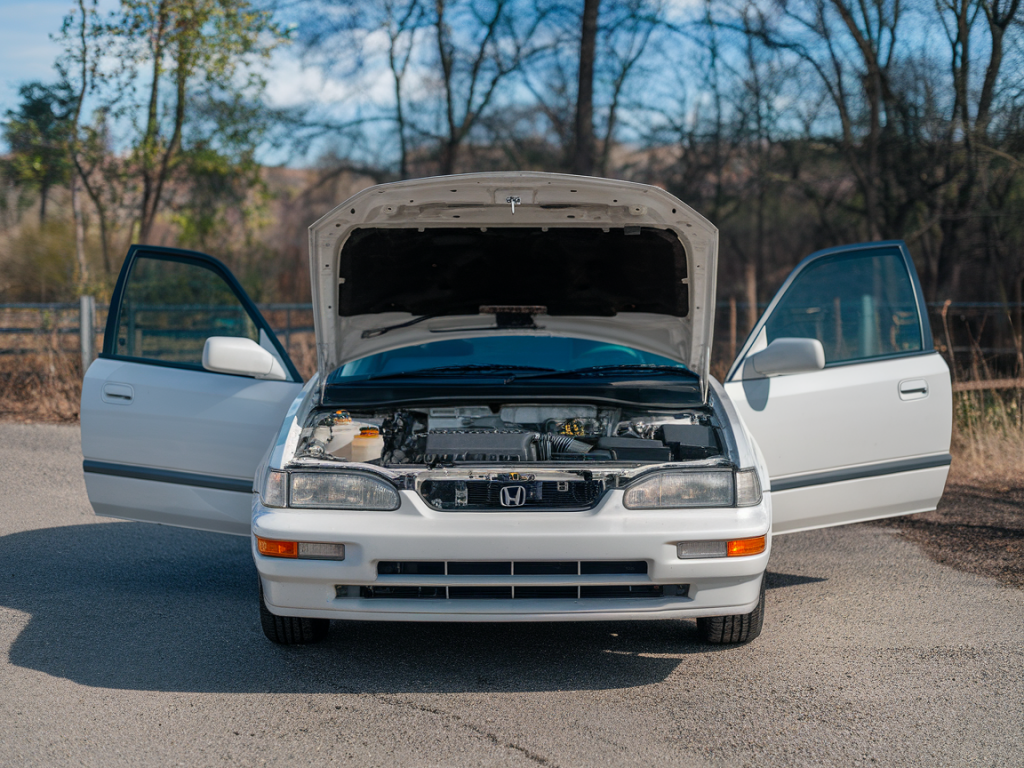
I love digging into quirks on older cars — especially when the fix doesn't require throwing money at the fuel system. A used Honda Accord that stalls intermittently can be maddening: it may run fine for days, then cut out at a light or hesitation under load. I’ve chased this problem across several Accords and learned that intermittent stalling usually points to sensors, ignition, vacuum leaks, or electrical gremlins rather than the fuel pump or injectors. Below I’ll walk you through a structured, practical approach to diagnose and often fix the issue without replacing the entire fuel system.
Start with data: OBD-II and live diagnostics
Before swapping parts, plug in a scanner. An OBD-II reader that shows live data (I use an OBDLink MX+ or a Bluetooth ELM327 with Torque Pro) will save you hours. Look for stored and pending codes, and watch these live parameters while the car is idling and while you reproduce the stall (if you can):
- Engine RPM
- MAF (if equipped) or MAP readings
- Short-term and long-term fuel trims (STFT/LTFT)
- Throttle position (TPS)
- Ignition timing (if shown)
- O2 sensor voltages
Intermittent stalls sometimes leave no codes, but live data can show odd jumps: sudden drops in RPM with corresponding oxygen sensor readings or wild fuel trims often point away from the fuel pump and toward air or ignition issues.
Check the basics: battery, alternator, and grounds
An often-overlooked cause is weak electrical supply. If voltage drops during a stall or when accessories are used, the engine management loses its reference and can cut out.
- Measure battery voltage at key moments: idle, revving, and when the stall happens. Voltage should be ~12.5V off, ~13.5–14.5V running.
- Inspect and clean battery terminals and engine/chassis grounds — corrosion or a loose ground can be intermittently fatal.
- Have the alternator tested if the battery voltage sags under load.
Ignition system: coils, plugs, wiring
On Accords, failing ignition coils or worn spark plugs commonly cause misfires and stalling. I always start with the easy things that wear out:
- Inspect spark plugs for wear, oil fouling, or uneven gaps. Replace with NGK or Denso plugs per the factory gap and interval.
- Swap coils between cylinders to see if a misfire follows a specific coil (if misfire codes appear or live data shows a specific cylinder misbehaving).
- Check ignition coil connectors for corrosion and secure fit. Flex the wiring harness gently while idling — an intermittent wiring fault may cause the stall.
Coils and plugs are inexpensive compared to fuel system overhauls and are often the cure.
Air intake & vacuum leaks: the usual suspects
Unmetered air will confuse the ECU and can lead to stalls, especially at idle or light throttle. I perform these quick checks:
- Inspect the intake boot and clamps from the airbox to the throttle body for cracks or loose clamps.
- Spray an easy-to-find aerosol like brake cleaner or carb cleaner around intake boots, vacuum lines, and the throttle body while the engine is idling. A change in RPM indicates a leak.
- Check all vacuum hoses, PCV lines, and the intake manifold for leaks or brittle lines. Replace any suspect hoses.
Throttle body, IAC (idle control), and TPS
A sticky throttle plate or a misbehaving idle air control (or the equivalent in drive-by-wire systems) can cause random stalling. I clean and inspect these parts:
- Remove and clean the throttle body with throttle-body cleaner. Pay attention to the throttle plate edges.
- If the car has a separate idle air control valve (older models), remove and clean it, or test it electrically with a multimeter.
- Check TPS voltage for smooth change as you manually open the throttle — sudden jumps or dead spots mean the TPS is faulty.
Sensors to test before accusing the fuel system
Several sensors can cause the ECU to cut fuel or mismanage timing, producing stalls. These are cheaper to test and replace:
- Crankshaft position sensor (CKP) — if the ECU loses the crank signal the engine will die. These can be intermittently faulty. Test resistance or check for a signal with a scope if you have one.
- Camshaft position sensor (CMP) — similar symptoms to CKP; intermittent loss causes stalls or no-starts.
- Mass Air Flow (MAF) or MAP sensor — dirty or failing MAFs often produce strange fuel trims and stalling. Clean MAF with proper MAF cleaner (don’t touch the wire). For MAP sensors, check for vacuum leaks and sensor voltage.
- O2 sensors — less likely to cause immediate stalls but can lead to fuel trim swings; check for slow or clamped readings.
Electrical harness, relays, and immobilizer
Intermittent electrical faults are classic stall culprits. Here’s how I approach them:
- Swap or bench-test the fuel pump relay and ECU main relays if you can reproduce the stall — a failing relay sometimes cuts power momentarily.
- Inspect the engine bay and underdash wiring for rodent damage, chafed wires, or loose connectors.
- If the car has an aftermarket alarm or immobilizer, disconnect it to rule out false shutdowns.
Evaporative purge valve (EVAP) and EGR — overlooked but possible
An EVAP purge valve stuck open can dump raw vapor into the intake at idle and cause stalling. Similarly, a clogged or malfunctioning EGR that opens at the wrong time can kill idle. I test these by:
- Listening for EVAP purge clicks and testing the valve with a vacuum pump if available.
- Checking EGR operation (or for carbon buildup) and cleaning if necessary.
Simple tests and tools I use in the garage
Tools make diagnosis fast:
- OBD-II scanner with live data
- Multimeter and basic test light
- Vacuum pump or smoke machine (for tricky vacuum leaks)
- Spray can of MAF cleaner/throttle cleaner
- Spare spark plug and coil for swapping tests
- Basic hand tools and a service manual or factory specs
Troubleshooting table: symptoms and likely causes
| Symptom | Likely causes | Quick checks |
|---|---|---|
| Stalls only at idle | Vacuum leak, dirty throttle/IAC, faulty TPS | Idle spray test, clean throttle body, check TPS voltage |
| Stalls under load or during acceleration | Ignition coils/plugs, CKP/CMP, MAF | Swap coils/plugs, watch MAF/MAP in live data |
| Stalls randomly with no code | Intermittent wiring/ground, relay, immobilizer | Wiggle harnesses, swap relays, check grounds |
| Engine dies but restarts immediately | Loss of sensor signal (CKP/CMP), weak electrical supply | Check battery/alternator voltage, monitor CKP signal |
When to replace parts
I avoid blind replacements. Replace items when:
- The component fails a bench test or swapping it moves the problem to another cylinder (coils/plugs).
- Cleaning (throttle, MAF) produces a measurable improvement.
- Live data or an oscilloscope confirms missing or noisy sensor signals (CKP/CMP).
- Visual inspection shows cracked boots, brittle vacuum hoses, or corroded connectors.
Budget tips: start with inexpensive parts and actions — clean the MAF/throttle, replace spark plugs, tighten and clean grounds, check relays — before moving to sensors or modules. NGK or Denso plugs, Bosch or OEM replacement sensors, and reliable relays make good value buys.
If you want, tell me the model year and engine code of your Accord, describe exactly when it stalls (idle, accel, hot/cold), and whether you have any OBD codes. With that I can point to the most likely culprits and a prioritized parts list to try first.