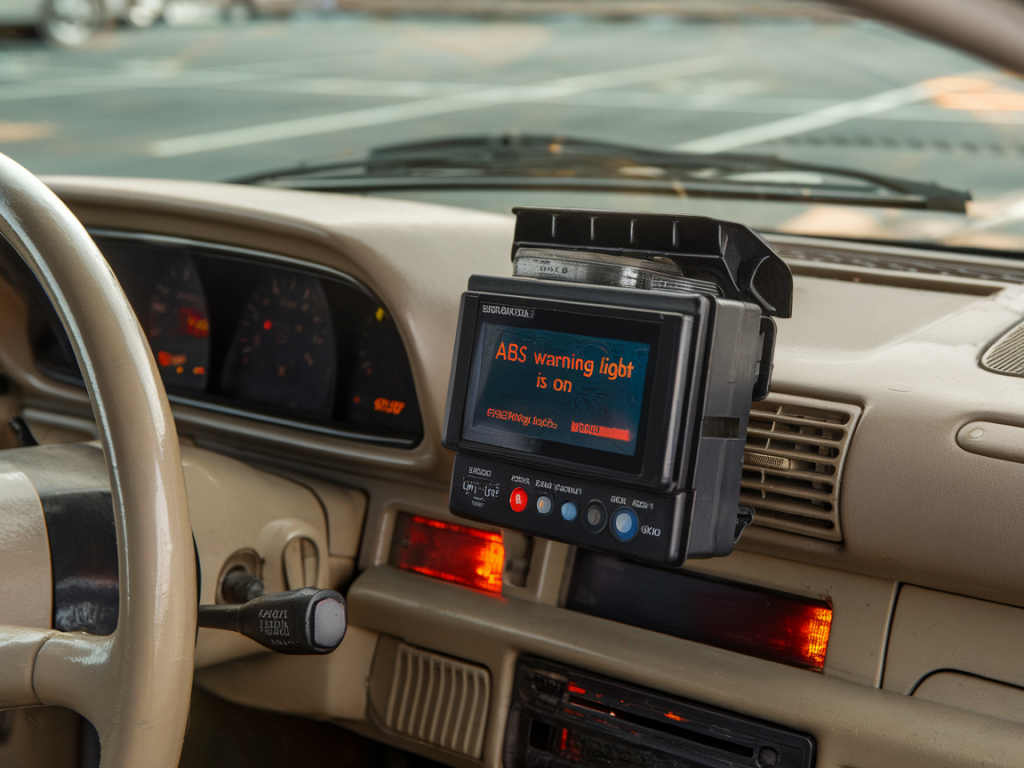
I remember the first time my ABS light came on: I was running errands, pulling into a grocery store, and the little amber icon winked at me like a mischievous gremlin. It was easy to ignore—until I stomped on the brakes later that week and felt the pedal behave oddly. Since then I've worked on a few ABS issues in my own garage and coordinated repairs with professionals, so I’ve learned to spot the warning signs before an ABS module failure leaves you stranded or compromises safety.
Why you should care about the ABS module
The ABS (anti-lock braking system) module controls the pulsing that prevents the wheels from locking during hard braking. If the module—or associated sensors and wiring—starts to fail, the car usually reverts to standard braking. That might sound fine, but without ABS you risk longer stopping distances and loss of steering control during hard stops on slippery surfaces. I treat any abnormal ABS behavior as a safety priority rather than an annoying dashboard light.
Common symptoms that suggest the ABS module is going bad
- ABS warning light stays on — The most obvious sign. If the light remains illuminated after the self-check at startup, the module has detected a fault.
- Pulsating brake pedal during normal stops — ABS should only pulse during emergency braking. If you feel pulsing during casual stops, that's a red flag.
- Brakes locking unexpectedly — Intermittent control loss where a wheel locks under braking can point to a failing module or erratic wheel speed sensor readings.
- ABS activates for no reason — If the system kicks in on dry pavement or at low speeds, it may be getting false readings.
- Unusual noises from the hydraulic unit — Grinding, whining, or constant pump noise when it shouldn’t be running often indicates an internal fault.
- Loss of traction/stability functions — Many cars tie ABS to traction control or stability control. If those systems are off or malfunctioning, ABS issues are a likely source.
- Brake pedal feels soft or spongy — While this can be caused by other brake issues, ABS hydraulic problems sometimes manifest as pedal feel changes.
Quick checks you can do at home
Before I reach for a scanner or call a shop, I run a few simple checks. These won’t fix every issue, but they’ll help narrow the problem and could save you money.
- Look at the ABS light at startup — When you turn the key to ON, the ABS light should illuminate briefly as the system does a self-test, then go out. If it stays on, note whether it’s steady or flashing (flashing can indicate a communication error).
- Scan for codes — I keep a compact OBD2 scanner that reads ABS codes (Autel, Launch, or a shop-grade tool). Check stored and pending codes. Wheel speed sensor codes (C1234-style) point to sensors or wiring; pump or valve codes point toward the hydraulic unit or module.
- Inspect wheel speed sensors and wiring — I jack up each corner, remove the wheel, and visually check sensors and wiring for corrosion, broken wires, or debris. Many sensors sit close to the hub and collect rust and grime.
- Check the ABS fuse and relay — A blown fuse or a faulty relay can cause the system to fail. I locate the fuse box, consult the manual, and confirm continuity with a multimeter.
- Examine brake fluid — Contaminated or low brake fluid can cause ABS malfunctions. Dark, dirty fluid or fluid with moisture contamination reduces hydraulic performance. If fluid looks terrible, a brake flush may be due.
What the fault codes mean — a useful table
| Symptom / Code | Likely cause | What I’d do first |
|---|---|---|
| Wheel speed sensor code (e.g., C1010) | Faulty sensor, damaged tone ring, wiring issue | Inspect/clean sensor, check wiring, test sensor resistance with multimeter |
| Hydraulic pump/valve code | Failing ABS hydraulic unit or stuck valve | Check brake fluid; if fluid OK, likely shop repair or module replacement |
| Communication error (CAN bus) | Module not communicating, bad connectors, ECU issue | Inspect connectors, scan other control modules, professional diagnosis |
| Yaw/steering angle sensor fault | Calibration issue or sensor failure | Recalibrate sensor (shop) or replace if faulty |
DIY fixes that sometimes work
I’ll be honest: the ABS module and hydraulic unit are sophisticated, and sometimes the fix is replacement. But I’ve had several cars where a simple, inexpensive action solved the problem.
- Clean and secure electrical connectors — Corrosion or a loose connector can create intermittent faults. I spray contact cleaner, let it dry, apply dielectric grease, and re-seat the connector.
- Replace or clean wheel speed sensors — A dirty sensor or rusted tone ring can give false signals. Cleaning often helps; if the sensor resistance is out of spec, replace it. Brands I’ve used include Bosch and Denso with good results.
- Replace ABS fuse/relay — Cheap and quick. Sometimes a blown fuse masks a bigger issue, but replacing it will tell you if something immediately trips it.
- Brake fluid flush — Contaminated fluid can cause valves to hang or the pump to work harder. A full flush with fresh DOT-rated fluid has fixed intermittent ABS activation for me before.
When it’s time to involve a pro
There are clear limits to DIY. I’ll take a car to a shop when:
- The ABS module itself is suspected (internal electronic failure).
- Multiple control modules report communication errors (CAN bus issues).
- There are persistent hydraulic codes even after fluid and sensor checks.
- The pump runs constantly or very loudly, indicating internal wear.
Replacing or rebuilding an ABS module often requires bench programming, VIN coding, or pairing with the vehicle’s ECU. Shops have the specialized tools for that. Expect repair costs to range widely: sensor replacement can be under $100 per corner if you DIY, while module replacement and coding can run several hundred to over a thousand dollars depending on the car and whether you use new or rebuilt parts.
Temporary safety steps if the ABS acts up on the road
If your ABS light turns on while driving, stay calm and adapt your driving:
- Increase following distance to allow more stopping time.
- Avoid hard braking and sudden maneuvers—ABS typically helps in those scenarios.
- Drive slowly and head directly to a safe location or your mechanic rather than pushing through long trips.
- If the brakes feel very soft or you have partial brake failure, pull over and call for a tow—don’t drive the vehicle.
Final practical tips I use
- Keep a basic ABS-capable scanner in my toolbox. Autel and Launch units cover many makes and read ABS codes that simple OBD2 apps miss.
- Document codes and behavior before repairs. That helps shops avoid unnecessary work.
- When buying used cars, test-drive in a safe area and check that the ABS light behaves correctly at startup.
- Consider a pro diagnostic if you see intermittent issues—electrical gremlins can be tricky and costly if misdiagnosed.
If you want, tell me the make, model, year, and the exact behavior your car is showing and I’ll walk you step-by-step through specific checks and likely causes for your vehicle. I’m happy to help you troubleshoot before you schedule repairs.