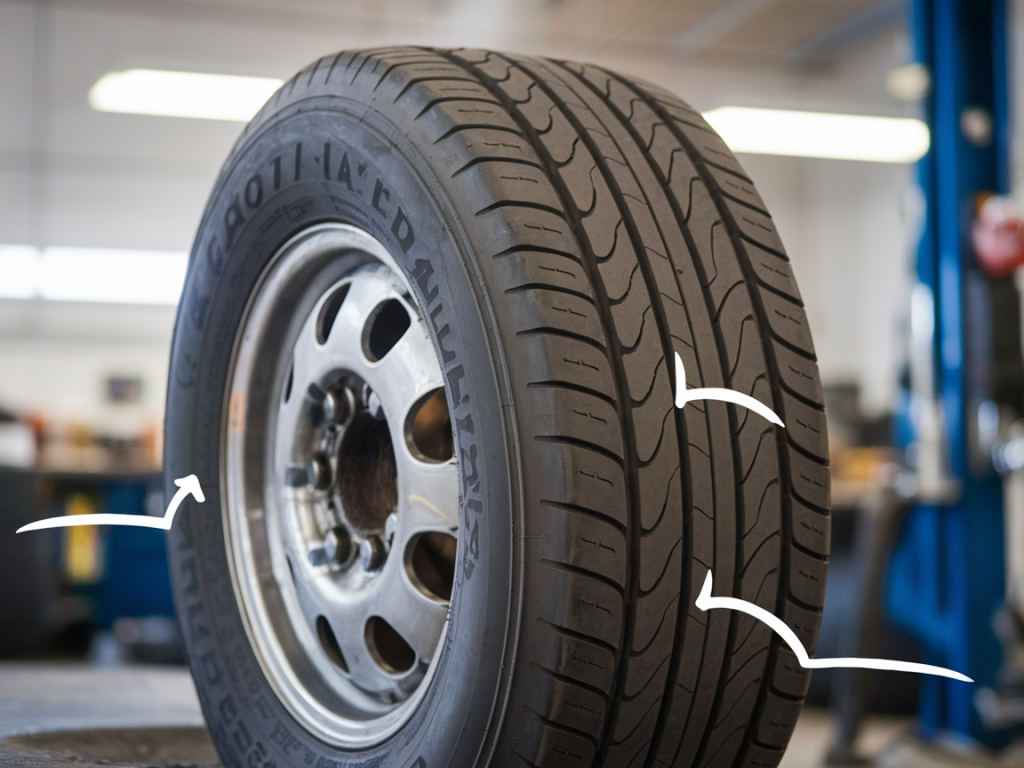
I spend a lot of time eyeballing tires — in my garage, at the shop, and on the road — because tire wear tells a story about what’s happening beneath your car. If you learn to read that story, you can catch alignment, suspension, and inflation issues early, save money, and stay safer. Below I’ll walk you through common wear patterns, what they usually mean, and practical steps to diagnose and fix the problem.
Why tire wear matters
Tires are the only part of your car that touches the road. Uneven wear shortens tire life, hurts fuel economy, reduces grip, and can hide more serious problems like bent suspension components or a misaligned frame. A quick visual check once a month and a regular tread-depth measurement can pay off in avoided breakdowns and better handling.
How I inspect tires
My basic inspection routine takes five minutes: with the car parked on a level surface I look for visible wear patterns, run my hand across the tread to feel for feathering or scalloping, check sidewalls for bulges or cuts, and measure tread depth with a gauge or a 20p/quarter coin if I’m traveling. I also note if wear is concentrated on one corner of the vehicle — that often points to specific suspension or alignment problems.
Common tire wear patterns and what they mean
Below are the wear patterns I see most often and the usual causes. These are general rules — sometimes multiple issues combine — but they give you a clear starting point.
- Center wear — tread worn down in the middle, edges less worn: usually caused by overinflation. When a tire is too hard the center bears more load and wears faster.
- Edge wear (both edges) — both shoulder edges worn, center less worn: typically due to underinflation. Low pressure makes the tire flex and the outside edges scrub more.
- One-sided edge wear — only the inside or outside edge is worn: often an alignment problem (high positive or negative camber) or incorrect toe.
- Feathering — tread ribs are smooth on one side and sharp on the other when you run your hand across them: usually a sign of incorrect toe alignment.
- Scalloping or cupping — dips or high-low spots across the tread, often showing as a rhythmic pattern: commonly caused by worn suspension components (shocks, struts, ball joints) or imbalance.
- Patchy wear or flat spots — random bald patches: can be caused by aggressive braking (locking wheels on non-ABS cars), dragging brakes, or a seized caliper.
- Sidewall damage or bulging — cuts, blisters, or bubble: typically impact damage (potholes, curbs) and requires immediate replacement for safety.
Quick reference table
| Wear Pattern | Likely Cause | Immediate Action |
|---|---|---|
| Center wear | Overinflation | Check and adjust pressure to manufacturer spec |
| Both-edge wear | Underinflation | Inflate tires, inspect for slow leaks |
| Inside or outside edge | Camber or toe misalignment | Get a professional alignment |
| Feathering | Toe incorrect | Alignment check and correct toe settings |
| Scalloping / cupping | Worn shocks/struts or imbalance | Inspect suspension, replace dampers, balance wheels |
| Patchy wear | Brakes or wheel bearing problems | Inspect brakes, bearings, and drive components |
| Sidewall bulge | Impact damage | Replace tire immediately |
Diagnosing specific problems — practical tips
Here are the steps I follow when a wear pattern points to a suspected issue:
- Inflation checks: Use a good-quality digital tire gauge. Compare the measured pressure to the sticker on the driver’s door jamb, not the number on the tire sidewall. Adjust when cold (before driving).
- Visual alignment cues: If all four tires show inside or outside edge wear, that’s usually a front-end alignment issue. If it’s just one corner, check that wheel’s camber and toe at a shop — home alignment without tools is risky.
- Feathering diagnosis: Run your hand along the tread. Feathering feels like fine serrations. It usually means toe is out of spec. A shop alignment will correct it and a new rotation may be needed depending on remaining tread.
- Scalloping / cupping diagnosis: Bounce each corner of the car. If the car bounces excessively or doesn’t settle quickly, suspect worn shocks/struts. Also check wheel balance — a shop can spin-test balance and inspect suspension bushings and mounts.
- Braking-related wear: If one tire has a worn spot and the car pulls under braking, inspect calipers and pads for uneven wear or a sticking piston. A seized caliper will overheat and wear the tire unevenly.
When to rotate or replace tires
Rotation is one of the cheapest ways to extend tire life and even out wear. I follow the vehicle manufacturer’s interval, usually every 6,000–8,000 miles (10,000–13,000 km). If a tire shows advanced wear on one edge or has less than 3 mm of tread remaining unevenly spread, replacement may be the better option.
Use the following as a quick guideline:
- Even wear and >4 mm tread: rotate and continue monitoring.
- Uneven wear but >3 mm in critical areas: correct the underlying issue (alignment, pressure) and rotate; consider shaving or replacement if the wear is severe.
- Bulge, sidewall damage, or <2 mm tread: replace immediately.
Costs and shop recommendations
Typical costs I’ve seen: a basic four-wheel alignment usually runs $75–$150, premium alignment services $150–$250 depending on the vehicle. New shocks or struts per corner can be $150–$400 installed depending on brand (Monroe, KYB, Bilstein are common options). Wheel balancing is often $10–$20 per wheel. If your tires are wearing unevenly, budget for alignment first — it’s the most common and cost-effective fix.
Pick a shop that will show you before-and-after alignment printouts. I like shops that also inspect suspension components without charging extra — worn bushings or ball joints should be identified before alignment, because they can affect results.
Preventive habits I recommend
- Check tire pressure monthly and before long trips. Use the manufacturer-recommended pressure.
- Rotate tires every other oil change or according to your owner’s manual.
- Inspect tires visually every time you fuel up — look for cuts, bulges, and unusual tread patterns.
- Replace shocks/struts in pairs (front or rear together) when they show wear — this prevents uneven handling and cupping.
- Keep records of air pressure, rotations, alignments and replacements — it helps diagnose recurring problems.
Reading tire wear is a skill that pays back quickly. With a few minutes and a basic gauge you can spot inflation issues, get in front of alignment problems, and know when a suspension visit is warranted. If you’re ever unsure, bring photos and a description of where the wear is concentrated to your local shop — a good technician can usually tell you what happened and how to fix it.