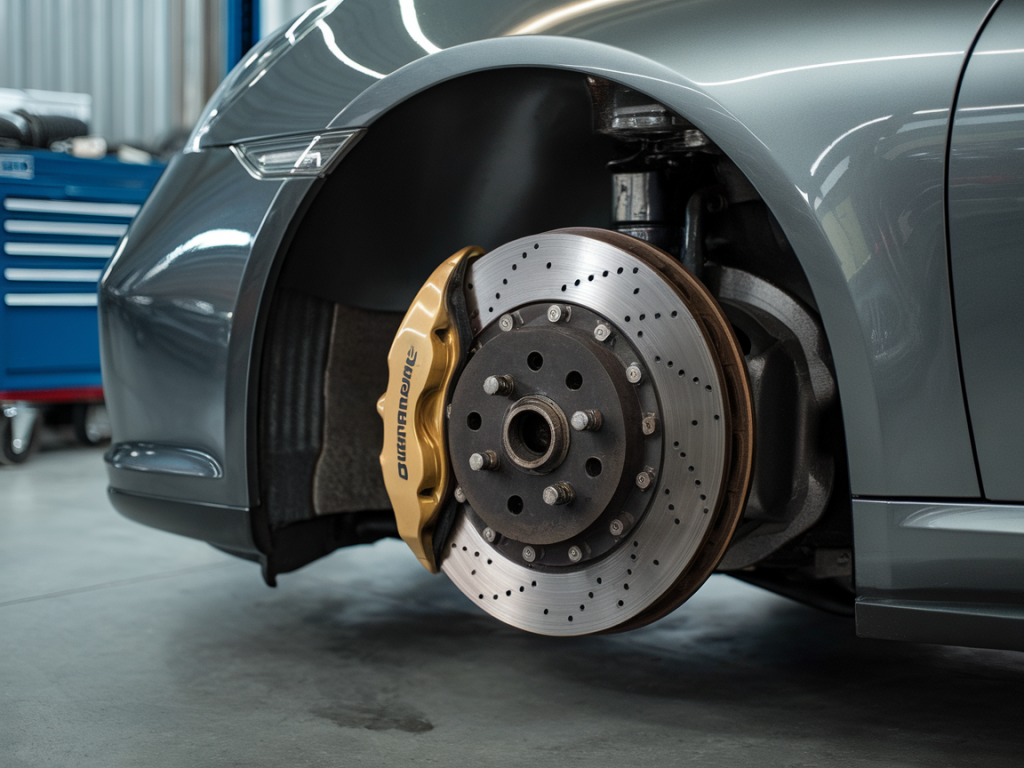
When it comes time to replace brake rotors, one of the first debates I have with readers, friends, or my mechanic is always the same: aftermarket or OEM? It’s a deceptively simple question with a lot of nuance. I’ve swapped rotors on my own cars, watched shops fit OEM parts, and tested a handful of performance and budget aftermarket rotors. In this piece I want to walk you through the real-world differences — performance, cost, longevity, and what I actually recommend depending on your situation.
What do we mean by OEM vs aftermarket?
OEM stands for Original Equipment Manufacturer. OEM rotors are the same design and, often, the same supplier components that were used when the car rolled off the assembly line. They’re what the manufacturer specified for that model.
Aftermarket rotors are any rotors not supplied as OEM for your vehicle. That includes reputable brands like Brembo, EBC, Zimmermann, and Hawk, performance-focused options, budget imports, and a wide range of drilled/slotted or coated designs. Some aftermarket parts match or improve on OEM specifications; others cut corners to hit a price point.
Performance: stopping power, heat management, and pedal feel
On a daily-driven compact or midsize car used mostly for errands and commuting, the average user won’t notice a big difference in stopping distance between a quality OEM rotor and a good aftermarket equivalent. Both are designed to meet the same friction and thermal requirements when paired with appropriate pads.
Where performance differences emerge is in higher-demand situations: spirited driving, towing, track days, or repeated heavy braking. Here are the things I look at:
My take: for everyday driving, OEM or a mid-range aftermarket rotor gives equivalent performance. For performance driving, a proven aftermarket rotor from a reputable brand typically outperforms stock designs — provided you pair it with the right pads and hardware.
Cost: upfront price vs lifetime cost
One of the biggest motivators for people choosing aftermarket rotors is price. It’s common to see aftermarket rotors priced 20–50% lower than OEM for many models. But cost isn’t just what you pay at the counter — it’s what you spend over the life of the rotor, and that includes additional parts and labor.
Things that increase total cost:
In my experience the sweet spot for most drivers is a mid-tier aftermarket rotor (brands like Zimmermann, Centric, or Bosch for mainstream cars) or OEM when on sale. If you want top-tier performance, expect to pay a premium for Brembo or EBC race-level rotors — and you’ll get measurable benefits under stress.
Longevity and reliability
Longevity is influenced by rotor material, manufacturing quality, vehicle use, and the pad compounds. OEM rotors are designed to meet a target lifespan suitable for average use; that’s often in the 50k–100k km range (30k–60k miles) depending on vehicle class and driving style.
Aftermarket rotors vary:
I once installed a set of low-cost import rotors on a winter beater to save money. They corroded and developed surface pitting after one season of road salt — I regretted the false economy. Conversely, I’ve fitted coated Zimmermann rotors to a commuter and they stayed true for many seasons with minimal surface rust.
How to decide: use case checklist
Here’s the checklist I run through before recommending or choosing rotors:
Common myths I hear and what I found
Quick comparison table
| Aspect | OEM | Aftermarket (mid-tier) | Aftermarket (performance) |
|---|---|---|---|
| Consistency | High | High | Varies (typically high for good brands) |
| Upfront cost | Moderate | Lower | Higher |
| Heat management | Good for stock use | Often improved | Best (designed for stress) |
| Longevity | Designed for long life | Comparable if quality-made | Good, but depends on use |
| Rust resistance | Varies (many uncoated) | Often coated options | Often coated or treated |
Practical tips before you buy
If you want a direct recommendation for a specific make and model, tell me the car, your typical driving, and budget — I’ll give a tailored suggestion with brand and pad pairings I’d personally use.