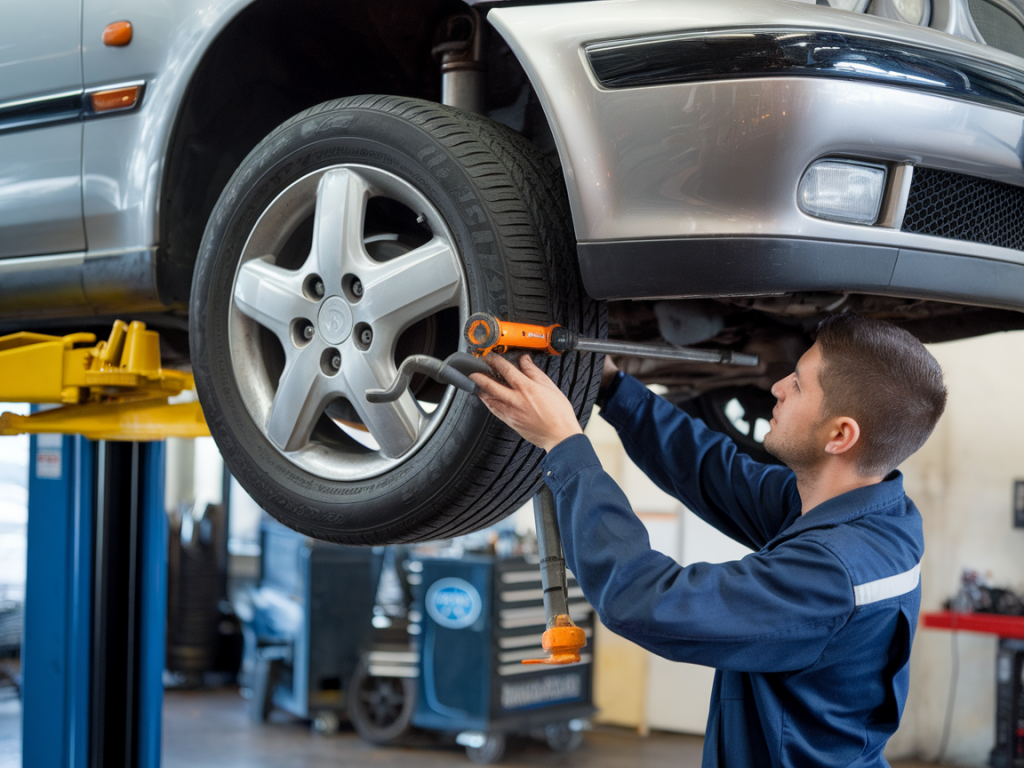
I’ve had cars that tracked perfectly until I stood on the brakes and suddenly the whole car tugged to one side. It’s unnerving — especially when it only happens under braking and otherwise the steering feels normal. Over the years I’ve diagnosed this problem on my own cars and on readers’ vehicles, and there are a few recurring causes that explain most cases. Below I’ll walk you through what makes a car pull left only when braking, simple tests you can do, and the alignment and brake fixes that actually sort it out.
Why a car can pull left only under braking
When the car pulls as you brake, the root cause is almost always an imbalance in the braking forces between the left and right sides — but that imbalance can come from several different places. Here are the main culprits I look for:
Sticking or seized caliper or slider pins — If the caliper on one side doesn’t slide freely, that brake will either drag (creating more braking force) or under-brake (less force) compared with the other side. A left-side caliper that drags will make the car pull left under deceleration.Uneven brake pad wear or glazing — A pad that’s worn thinner, contaminated, or glazed will change the friction level on that corner, shifting braking balance.Warped rotors or heavy runout — Rotor thickness variation can create pulsing and uneven clamp, sometimes felt as a pull.Collapsed or internally damaged flexible brake hose — A hose that won’t return to original shape can trap pressure on one side, keeping that brake partially applied after pedal release.Parking brake partially engaged or sticking — On rear-drum or some rear-disc setups, a sticking parking brake or seized hardware can create a constant drag on one side.Brake proportioning valve or ABS module issue — Hydraulic imbalances caused by a faulty valve or ABS control sometimes manifest only under braking.Suspension or alignment changes under load — Worn control-arm bushings, badly worn ball joints, or strut mounts can change toe/camber under braking loads and cause a directional pull that only occurs when decelerating.Tire pressure and uneven wear — This is simpler but often overlooked: different tire pressures or asymmetric wear can make the car track differently when load shifts forward on braking.How I test to narrow down the cause
Before I recommend any parts replacement, I do a few quick checks that save time and money:
Road test in a safe area — I do repeated controlled stops from the same speed on a flat, quiet road to confirm the pull is consistent and only under braking. This rules out one-off surface or gust-of-wind issues.Hand-brake and free-roll check — With the car parked on a level surface, I jack each wheel and spin it by hand. Dragging or rough rotation pinpoints a stuck brake, seized caliper, or parking brake issue.Compare tire pressures and inspect tires — I match pressures and look for uneven wear, cupping, or cord exposure. If pressures differ by more than 2-3 psi that alone can change behavior under braking.Visual caliper and hose inspection — With wheels off, I check caliper slider boots, look for leaking fluid, and flex the brake hose. A hose that’s soft or deformed may be collapsing internally.Brake temperature test — After a cautious road test, I carefully touch (or use an infrared thermometer) to compare rotor temperatures. A hotter rotor on the left typically means that brake is dragging.Simple fixes you can do at home
Not all fixes require a shop. If you’re comfortable with basic brake work, these actions often solve the pull:
Clean and lubricate caliper slide pins — Remove the guide pins, clean off old grease and corrosion, then apply high-temperature silicone or lithium caliper grease and reassemble. Seized pins are a common cause and this often cures the problem.Replace pad hardware and anti-rattle clips — If pads are sticking in abutments, new clips and anti-rattle shims restore free movement.Replace flexible brake hoses — Old hoses that collapse internally won’t return fluid properly and should be replaced. I usually choose OEM-style hoses from brands like Bosch or Goodridge for reliability.Resurface or replace rotors and pads — If rotors are warped or pads glazed, a resurfacing or fresh brake-pad and rotor set (Brembo, ACDelco, Wagner, or similar) often fixes asymmetric braking feel.Adjust parking brake hardware — For drum or integrated rear brakes, free up seized cables, clean and lubricate pivot points, or replace worn components so the parking brake releases fully.When you need an alignment or suspension intervention
Sometimes the brakes are fine but the suspension changes geometry under load and creates a pull only while braking. These are the fixes I recommend when I suspect this class of problem:
Inspect and replace worn bushings — Control arm bushings, subframe mounts, and strut mounts that are collapsed let suspension points shift when braking loads transfer. Replacing these restores predictable geometry.Check ball joints and tie rod ends — Excess play here can let a wheel pivot differently under braking forces; replacing worn joints won’t just cure the pull, it’s a safety must.Get a proper alignment after repairs — If you replace suspension components or anything that changes ride height or bushings, follow up with a four-wheel alignment. Spec'd toe and camber help balance braking forces, and a shop can measure dynamic changes while braking if needed.A practical diagnostic checklist (quick reference)
| Symptom | Quick test | Likely fix |
| Pulls left under braking | Spin wheels by hand; check rotor temp | Caliper service, hoses, pads/rotors |
| Hot left rotor after short drive | Infrared check post-stops | Sticking caliper, seized parking brake |
| Pull only when braking hard | Road test with repeated stops | Alignment under load, worn bushings |
| Pull with ABS activation | Scan codes, check ABS sensors/wiring | ABS module/valve service, sensor replacement |
When to go to the shop
I do a lot of this work myself, but I send readers to a trusted shop when the problem points to hydraulic complexity, ABS faults, or subframe/suspension components that require presses or alignment machines. Get professional help if you’ve got:
ABS warning light or codesSeized calipers that won’t free with basic disassemblyCollapsed hoses, or visible brake fluid leaksSuspension components that require pressed-in bushings or a specialist alignmentWhen you do go to a shop, ask them to show you the hot-rotor test or to keep the wheels off and demonstrate free rotation after repairs — a good technician will be happy to prove the fix.
Parts and fluids I trust
For brake pads and rotors, I’ve had consistent results with Brembo and Bosch for performance or OE-style replacements, and Wagner or ACDelco for budget-friendly daily drivers. For caliper hardware and hoses, OEM-quality or reputable aftermarket (e.g., Goodridge, Centric) is worth the extra few dollars: a failing hose or cheap caliper can cost you more in labor later. Always bleed and top up brakes with DOT-rated fluid as specified by the manufacturer — I usually use DOT 4 for modern cars unless the manual calls for DOT 3 or DOT 5.1.
Fixing a car that pulls left only under braking is usually straightforward once you follow a logical diagnostic path: confirm the symptom, check brakes and hoses for drag, inspect suspension bushings and joints, then replace or repair the failed items and finish with an alignment if geometry changed. Do the simple checks first — hand-spin the wheels, compare rotor temperatures, and match tire pressures — and you’ll often avoid unnecessary parts swapping. If the fix requires special tools or hydraulic work, get it done by a competent shop and ask for before-and-after demonstrations so you know the job solved the problem.