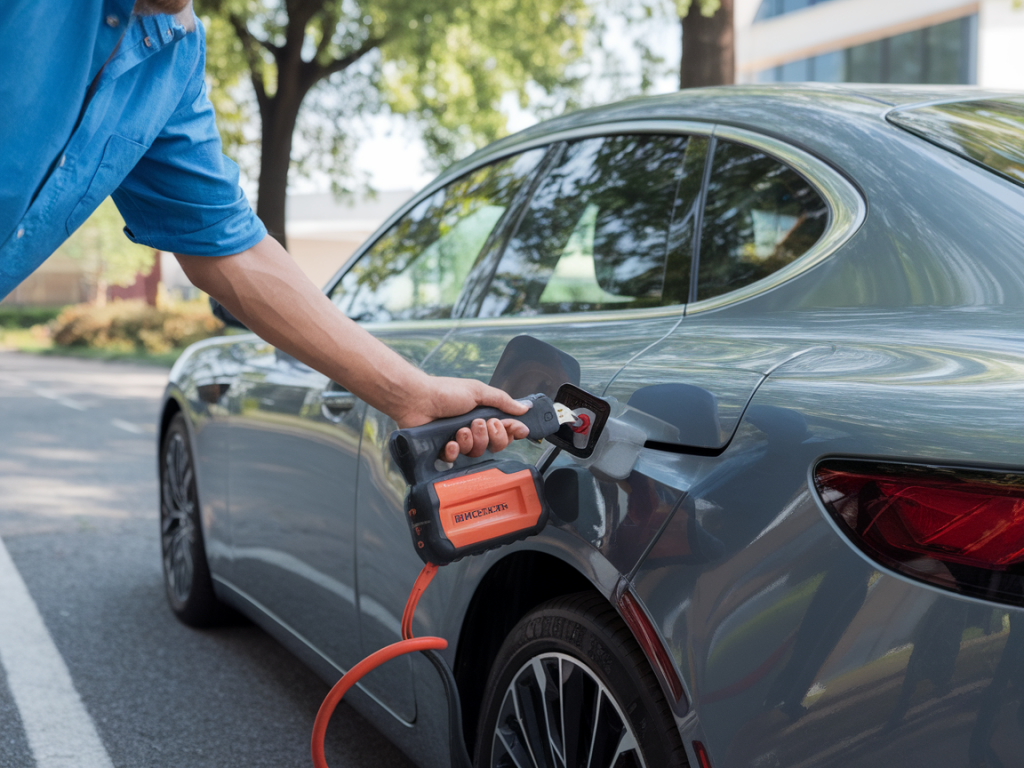
Modern cars with keyless entry and push-button start bring real convenience — until the battery dies and you’re left wondering whether a jump-start will trip the immobiliser or send expensive electronics up in smoke. I’ve jump-started enough keyless vehicles to know the right mix of caution and confidence required. Below I walk you through safe, practical steps that minimize risk to the immobiliser, ECU, and other sensitive electronics.
Why keyless cars are different
Keyless vehicles use a network of sensors, control modules, and electronic immobilisers that communicate constantly. Unlike old-school cars where the starter was a simple heavy-duty motor, today’s systems depend on low-voltage signals from the battery to several modules (body control module, immobiliser, engine control unit). That makes them more vulnerable to voltage spikes, reversed polarity, or brownouts during jump-starts.
That doesn’t mean you can’t safely jump-start them — it just means a bit more care and the right tools. I always treat keyless cars as slightly more delicate electrical systems than their predecessors.
Tools and gear I recommend
Quality jump starter pack (lithium, with built-in reverse-polarity protection and spark-proof clamps) — examples: NOCO Boost, Clore Automotive Jump-N-Carry. These are my go-to because they isolate the donor source and reduce the chance of spikes.Standard jumper cables — heavy gauge (4 AWG or thicker) if you must use a donor vehicle; not ideal for modern electronics but workable with care.Insulated gloves and safety glasses — small investment, big safety payoff.Owner’s manual or manufacturer instructions — always check for model-specific jump-start procedure and the location of the negative grounding point.Pre-checks before you touch the clamps
Confirm there’s actually a dead battery — dashboard lights may be dim but accessories sometimes work. If the vehicle is completely unresponsive, that’s a battery issue most of the time.Check the battery and terminals for obvious damage, heavy corrosion, cracks, or leakage. If you see any of these, do not attempt a jump; call a professional.If the vehicle has an external positive terminal or a designated jump-start terminal under the hood, use that instead of clamping directly to the battery. Manufacturers often provide these to protect electronics.Locate a solid chassis ground or engine block ear for the negative connection — more on this below.Turn off all accessories and electronics: HVAC, lights, radio, infotainment, and anything else that could draw power when the car starts. Remove any plugged-in devices from USB ports.Jump-starting with a portable jump pack (my preferred method)
Using a portable jump starter is the safest routine I use because it isolates the donor power and usually has protections built-in. Follow these steps:
Ensure the jump pack is fully charged and rated for your vehicle’s engine size (small 12V packs usually cover most petrol engines; diesel engines or V8s may need higher cranking amps).Identify the vehicle’s positive jump terminal if provided. If not, use the positive battery post. Keep the two clamps from touching each other.Attach the positive (red) clamp to the positive terminal.Attach the negative (black) clamp to a solid unpainted metal point on the engine block or chassis — not the negative battery post unless the manual explicitly allows it. The reason: clamping to chassis reduces the chance of sparking near the battery and minimizes electrical interference with the vehicle’s modules.Power on the jump pack and follow its instructions. Some packs have a “boost” or "engine start" mode.Attempt to start the car. If it doesn’t start after a couple of tries, wait a minute and try again rather than continuous cranking. Continuous cranking is hard on starters and electronics.Once the car starts, remove clamps in reverse order (negative first, then positive) and let the engine idle for at least 15–30 minutes or drive gently to recharge the battery.Jump-starting with another car (donor vehicle)
If you must use another vehicle, follow these stricter rules to avoid voltage spikes or ground loops.
Park the donor vehicle close enough for cables but avoid contact between vehicles.Turn off both vehicles, remove keys from donor’s ignition, and keep both in park or neutral with parking brakes on.Attach positive (red) clamp to donor positive battery post, then to the dead vehicle’s positive post (or designated jump terminal).Attach negative (black) clamp to donor negative post, then to the known good chassis ground on the dead vehicle. Do not connect the negative to the dead battery’s negative post if the manufacturer warns against it — check the manual.Start donor vehicle and let it idle for a few minutes. Attempt to start the dead vehicle. If it takes too many attempts, stop and reassess.Remove cables in reverse order and let the jumped car charge up.Protecting the immobiliser and electronics
Keyless systems sometimes require the key fob to be recognized after a battery reconnection. Here’s how to avoid tripping the immobiliser:
Keep the key fob inside the car (if possible) or within range when you attempt to start. Some cars refuse to start if they don’t detect the fob — this is not an immobiliser trip, just immobility due to authentication.If the car enters an anti-theft mode after a battery disconnect, consult the owner’s manual. Many brands (Toyota, BMW, Volkswagen, etc.) include a simple sequence to reset the system — often inserting the key or holding the fob close to a specific spot (door handle, start button) while pressing the start button.Use a jump pack with built-in surge protection and reverse polarity protection. That prevents transient spikes from reaching sensitive modules.Avoid “hot-wiring” or repeated jump attempts that could cause the immobiliser to perceive tampering. If the immobiliser locks the starter, some vehicles need a dealer or an authorised reset.After the jump: checks and follow-up
Keep the engine running and take a short drive to allow the alternator to recharge the battery. If the car dies again shortly after, the battery or alternator likely needs replacement.Observe the dashboard for warning lights. A persistent immobiliser or engine light after a successful start might indicate a fault that needs diagnostic scanning — consider a trip to a shop with an OBD-II reader.If you had to use a lot of cranking or saw unusual behavior (smoke, burning smell, persistent clicking), switch off and call a professional. These are signs of deeper electrical trouble.Extra tips from the garage
Carry a small, quality jump pack in the trunk. I keep a NOCO Boost on hand and it’s saved me and other drivers more than once.If you frequently do short trips, the battery may not fully recharge. Consider a smart trickle charger or battery maintainer if the car sits for days at a time.Replace battery terminals or cables that show heavy corrosion; poor connections increase voltage fluctuations during starts.Document any immobiliser codes or weird behavior after a jump. If you end up at the dealership, these notes speed up diagnostics.Jump-starting a keyless car is perfectly doable when you use the right gear and follow a careful procedure. Treat the vehicle’s electronics with respect, avoid risky shortcuts, and when in doubt, use a portable jump pack or call roadside assistance. Safety always comes before speed — and a calm, methodical approach keeps your immobiliser and ECU happy.