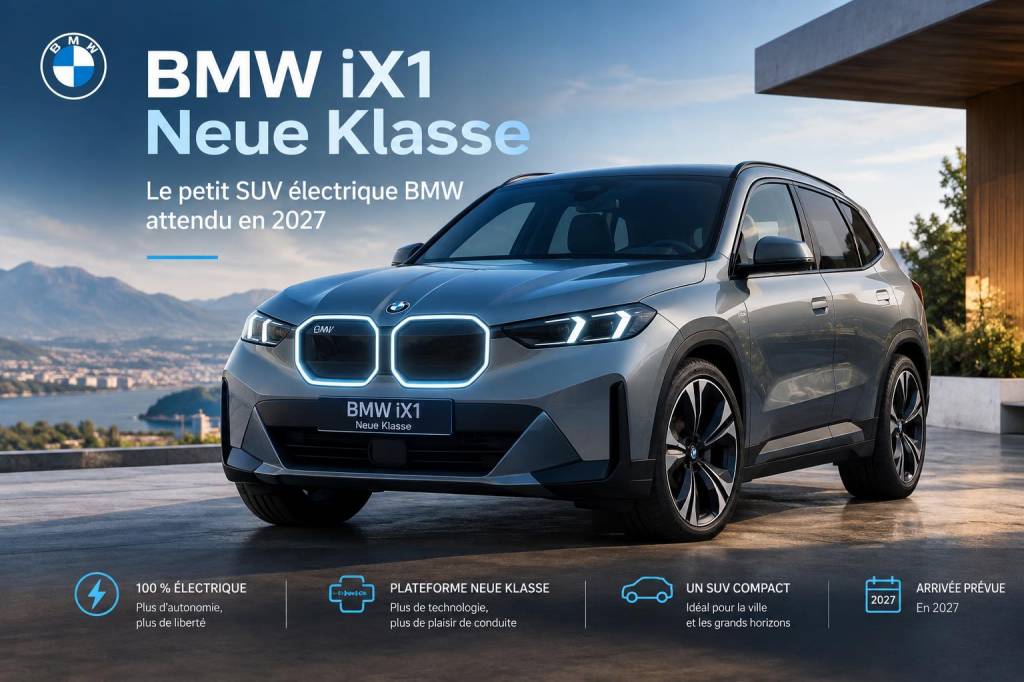
I keep coming back to one question whenever BMW’s next compact electric SUV comes up: how much can a brand change a familiar model name without losing what made it familiar in the first place? That is exactly why the petit SUV électrique BMW attendu en 2027 matters so much. It is not just another product update. It is BMW preparing a full generational shift, with Neue Klasse architecture, 800-volt hardware, and a much sharper electric identity for a compact premium SUV that many buyers already know as the iX1.
From my point of view, this is one of the most important BMW launches of the decade because it sits at the intersection of three pressures: tighter emissions rules, customer demand for faster charging, and a market that still wants a practical SUV with a badge that feels premium without crossing into full-size territory. I also think it says a lot about where compact EVs are heading more broadly. If BMW gets this right, the iX1 Neue Klasse could become a reference point for the segment rather than just a transition model.
What I expect from the iX1 Neue Klasse
The current iX1 already gives BMW a foothold in the compact electric SUV class, but the Neue Klasse version should be a much deeper rewrite. BMW has already made it clear that Neue Klasse is not a mild refresh or a simple styling exercise. It is a new platform strategy designed around electric powertrains first, with efficiency and software integration at its core.
For the 2027 timing, I would expect BMW to use the new generation to widen the gap between electric and combustion versions. In practical terms, that likely means:
- an 800-volt electrical architecture for faster DC charging
- new battery chemistry with higher energy density
- better thermal management for repeatable charging performance
- more efficient motors and power electronics
- a redesigned cabin focused on digital interfaces and reduced physical clutter
- more usable range in real-world driving, not just lab figures
That list may sound familiar, but what matters is execution. Compact EVs often struggle to balance price, packaging, and range. BMW will need to deliver a car that feels genuinely premium without becoming too expensive for the segment it serves.
Why 800 volts changes the story
The move to 800 volts is probably the most important technical detail. In everyday terms, it means the car should be capable of accepting charging power much faster than the 400-volt setups common in many current EVs. That does not automatically guarantee class-leading charging in every real-world scenario, but it creates the hardware headroom for much shorter stops on long trips.
I pay close attention to charging architecture because it affects ownership more than spec-sheet bragging rights do. If a compact SUV can add a meaningful amount of range in 10 to 15 minutes, it changes the way people use the car. Long-distance driving becomes less of a planning exercise. That matters for families, commuters with unpredictable routines, and company-car drivers who do not want downtime to become a daily irritation.
There is also a second benefit: efficiency. A more advanced electrical system can reduce losses, improve heat handling, and support stronger sustained performance. In a segment where buyers still compare EVs on range anxiety and charging speed, that matters as much as acceleration figures.
What I think BMW is trying to protect
BMW is not only chasing technical leadership. It is also trying to protect its brand identity. The company has built a reputation around balanced handling, quality interiors, and a driving feel that avoids excess. In a compact SUV, that is not easy to preserve because the format itself leans toward practicality rather than emotion.
That is why I expect the iX1 Neue Klasse to be tuned carefully. BMW cannot afford a car that feels sterile, but it also cannot afford a ride that is too firm for everyday use. If the brand gets the chassis, steering, and pedal response right, the car could stand out from more comfort-focused rivals. If it misses, the model may become just another premium EV with a familiar badge.
From my experience following EV launches, buyers in this class usually care about five things more than marketing claims:
- real-world range in cold and mixed conditions
- charging speed from 10 to 80 percent
- rear-seat space and boot usability
- software stability and ease of use
- total running cost versus fuel alternatives
That is the lens I would use on the Neue Klasse version, not just horsepower or zero-to-60 claims.
How it may compare with rivals
The compact electric SUV field is getting crowded fast, and that is good news for buyers. The iX1 Neue Klasse will likely be measured against cars such as the Mercedes-Benz EQA successor strategy, the Volvo EX40, the Audi Q4 e-tron family, the Tesla Model Y in lower trims, and an expanding list of Chinese competitors in Europe and beyond.
What BMW needs is a clear value proposition. I would summarize the likely positioning like this:
| Area | BMW iX1 Neue Klasse likely focus | Market challenge |
|---|---|---|
| Charging | 800-volt speed and strong DC performance | Prove real-world consistency, not just peak power |
| Range | Efficient drivetrain and improved battery packaging | Stay competitive in winter and motorway use |
| Interior | Clean digital cabin with premium materials | Keep ergonomics simple and intuitive |
| Driving feel | Balanced steering and controlled body motions | Match BMW expectations without harshness |
| Price | Premium, but still reachable for compact SUV buyers | Avoid pricing itself above its own audience |
I think the pricing strategy will be one of the biggest clues to BMW’s confidence. If the company pushes the car too far upmarket, it risks losing the buyers who would otherwise trade up from combustion crossovers. If it keeps the entry points too low, it may pressure margins and equipment levels. That balance is hard, especially when battery costs still matter so much.
What the 2027 timeline tells me
The 2027 arrival window is interesting because it suggests BMW is giving itself time to align product development, supplier readiness, and manufacturing changes. That is a smart move. Too many brands rush new EVs into showrooms before software, charging calibration, and supply chain maturity are ready.
BMW also appears to be spacing out its transition rather than flipping a switch. That makes sense in a market where not every customer is ready to go fully electric, even if the long-term direction is clear. A 2027 launch also gives BMW room to respond to regulatory changes in Europe and to watch how charging networks evolve.
For readers like me, that timeline means two things:
- there is time for the current iX1 to remain relevant as an available option
- the Neue Klasse version can arrive with fewer early-stage compromises
I would rather wait a little longer for a compact EV that feels properly engineered than get an early release with software bugs and charging inconsistencies. In this category, maturity matters.
What I would watch before buying one
If I were shopping for this SUV when it finally arrives, I would not stop at the headline range or the charging claims. I would check the details that affect daily ownership. Those details usually decide whether a vehicle feels easy or exhausting to live with.
- Battery preconditioning: Does it work automatically and reliably before fast charging?
- Winter performance: How much range drops in cold weather and highway use?
- Rear seat comfort: Is the floor high, and are knees sitting too elevated?
- Boot shape: Is the load area practical for luggage, tools, or family gear?
- Software response: Are menus quick, clear, and easy to use while parked?
- Service access: Can local dealers handle EV-specific maintenance and diagnostics smoothly?
I would also pay attention to how BMW handles tire wear, brake regeneration behavior, and suspension tuning. These may sound like small things, but they shape ownership cost and long-term satisfaction.
Why this model matters beyond BMW
In my view, the iX1 Neue Klasse is not only about BMW. It is also a signal to the rest of the industry. Compact premium EVs are moving from early adoption toward mainstream expectation. Buyers now assume fast charging, polished software, and decent range are normal, not special extras.
That raises the bar for every competitor. If BMW proves that an 800-volt compact SUV can stay refined, practical, and financially credible, others will have to respond. If it fails, the market may continue rewarding the brands that focus more aggressively on price or raw efficiency rather than traditional premium feel.
That is why this launch feels bigger than a model update. It is a test of whether a legacy premium brand can reinvent a familiar nameplate without turning it into a different kind of product altogether.
Key figures and industry context I would keep in mind
Several numbers frame the conversation around this vehicle:
- 2027: expected launch window for the Neue Klasse compact SUV
- 800 volts: electrical architecture expected to support faster charging
- Compact premium SUV: one of the most competitive EV segments in Europe
- 10 to 80 percent: the charging window many buyers use as a practical benchmark
- 1 to 2 charging stops: the difference that can define a long motorway trip
Those numbers matter because they translate engineering into ownership reality. Range without charging speed is incomplete. Charging speed without usable range is not enough. Premium branding without clear practicality is easy to ignore. The iX1 Neue Klasse has to deliver on all three.
Sources I would trust for tracking the story
For anyone following this development closely, I would keep an eye on a mix of official and independent reporting. These are the kinds of sources I would use when verifying updates and separating confirmed details from speculation:
- BMW Group press releases and investor communications
- Reuters automotive coverage for production and strategy updates
- BMW Blog for model-specific reporting and prototype analysis
- InsideEVs for charging and platform discussions
- Auto Express and Autocar for European market context
Useful references include BMW Group newsroom material, Reuters reports on BMW’s Neue Klasse rollout, and editorial coverage from outlets that regularly track EV platform development. For a subject like this, I always prefer to cross-check announcements with at least two independent reports before treating a detail as settled.